
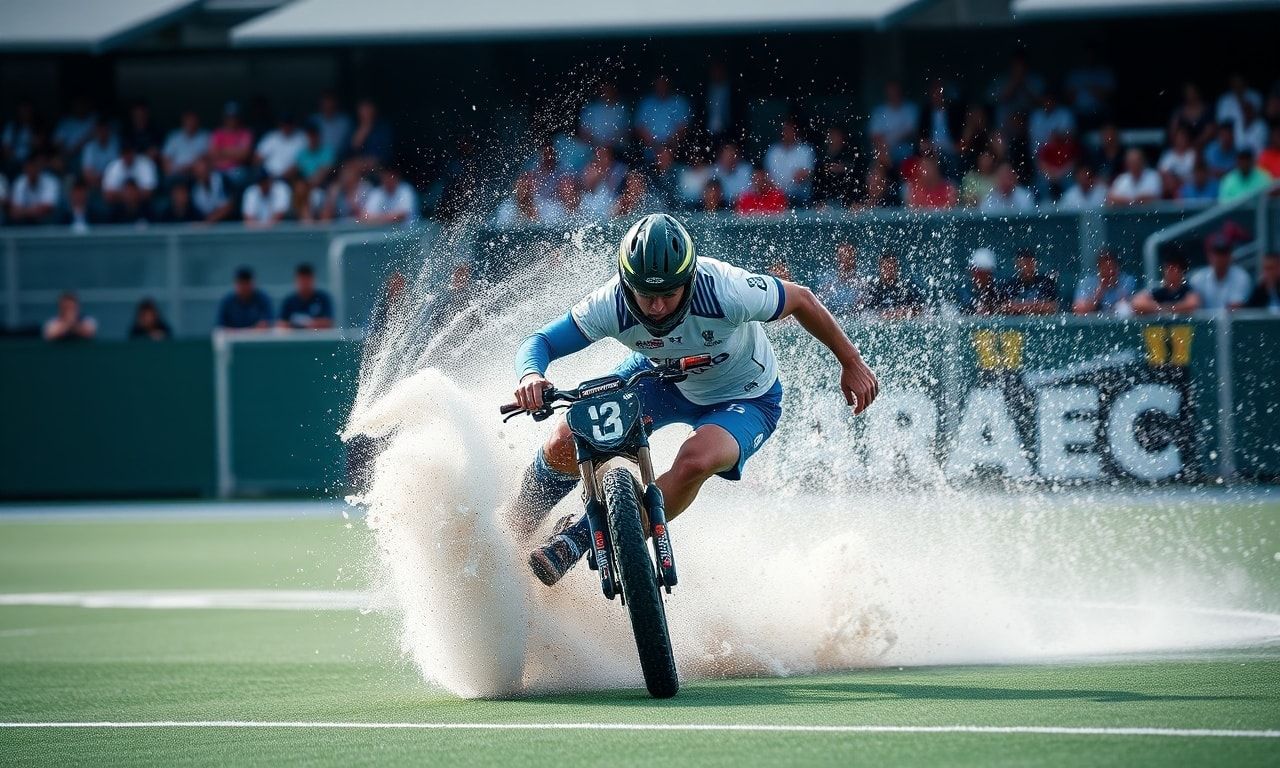
The Evolution of Sports Documentation
The world of sports has always been about pushing boundaries, breaking records, and capturing the essence of human endeavor. From the early days of hand-drawn illustrations to the advent of high-definition cameras, the documentation of sports has evolved significantly. Today, action cameras have revolutionized how we capture and relive sporting moments, offering unprecedented angles and perspectives that were once unimaginable.
The Rise of Action Cameras in Sports
Action cameras, with their compact size and high-definition capabilities, have become indispensable tools for athletes, coaches, and sports enthusiasts. These cameras are designed to withstand extreme conditions, making them perfect for capturing high-speed action in various sports. Whether it’s a skier navigating a treacherous slope or a cyclist racing down a steep hill, action cameras provide a unique point of view that immerses the viewer in the action.
One of the most significant advantages of action cameras is their ability to capture first-person perspectives. This feature is particularly useful in sports like surfing, skateboarding, and mountain biking, where the athlete’s point of view can provide a thrilling and immersive experience. Additionally, action cameras often come with advanced features such as image stabilization, waterproofing, and wide-angle lenses, ensuring that every moment is captured with clarity and precision.
Enhancing Training and Performance
Action cameras are not just for capturing memorable moments; they also play a crucial role in training and performance analysis. Coaches and athletes use these cameras to review their techniques, identify areas for improvement, and track progress over time. For example, a soccer player might use an action camera to analyze their shooting technique, while a basketball coach might use it to study the team’s defensive strategies.
Moreover, action cameras can be mounted on various equipment, such as helmets, handlebars, and even drones, providing a versatile tool for capturing different angles and perspectives. This flexibility allows athletes and coaches to gain a comprehensive understanding of their performance, leading to more effective training regimens and improved results.
The Impact on Sports Broadcasting
The integration of action cameras into sports broadcasting has transformed the way viewers experience live events. Broadcasters now use these cameras to provide dynamic and engaging content, offering viewers a front-row seat to the action. From GoPros mounted on race cars to cameras attached to the helmets of football players, the possibilities are endless.
For instance, during a high-speed car race, action cameras can capture the driver’s perspective, giving viewers a sense of the speed and intensity of the event. Similarly, in a football match, cameras mounted on the players’ helmets can provide a unique view of the game, allowing fans to see the action from the players’ perspective.
This innovative use of technology has not only enhanced the viewing experience but has also increased the popularity of various sports. Fans are now more engaged than ever, thanks to the immersive and thrilling content provided by action cameras.
Choosing the Right Action Camera
With the growing popularity of action cameras, there are numerous options available in the market. Choosing the right camera depends on several factors, including the type of sport, the desired features, and the budget. Here are some key considerations when selecting an action camera:
- Resolution and Frame Rate: Look for cameras that offer high resolution (4K or higher) and high frame rates (60fps or more) to capture smooth and detailed footage.
- Durability: Ensure the camera is waterproof, shockproof, and dustproof to withstand the rigors of extreme sports.
- Battery Life: Opt for cameras with long battery life or the ability to use external power sources to ensure uninterrupted recording.
- Connectivity: Choose cameras with Wi-Fi, Bluetooth, or GPS capabilities for easy sharing and tracking.
- Mounting Options: Consider cameras that come with a variety of mounting accessories to suit different sports and angles.
Innovative Uses Beyond Sports
While action cameras are primarily used in sports, their versatility extends beyond the athletic arena. For example, adventure travelers use these cameras to document their journeys, while filmmakers utilize them to capture unique and dynamic shots. Additionally, action cameras are increasingly being used in law enforcement and emergency response situations to provide real-time footage and enhance situational awareness.
In the automotive industry, action cameras are used to capture driving experiences and provide valuable data for performance analysis. For instance, the Honda Civic tech features review 2026 highlights the integration of advanced camera systems in modern vehicles, showcasing how technology is enhancing both safety and performance on the road.
The Future of Action Cameras in Sports
The future of action cameras in sports looks promising, with continuous advancements in technology driving innovation. Emerging trends such as virtual reality (VR) and augmented reality (AR) are set to revolutionize the way we capture and experience sports. Imagine being able to virtually step into the shoes of your favorite athlete and experience the game from their perspective.
Furthermore, the integration of artificial intelligence (AI) and machine learning (ML) in action cameras is expected to enhance their capabilities. Features such as automatic scene recognition, object tracking, and real-time analytics will provide athletes and coaches with valuable insights to improve performance and strategy.
As technology continues to evolve, action cameras will play an increasingly important role in sports, offering new ways to capture, analyze, and experience the thrill of athletic competition.