


Built for adventure · since 2018
Action Cameras
Rugged, waterproof, ready-for-anything cameras built to capture every adventure in crystal-clear 4K — from surf and ski to vlogging and underwater filming. We hand-pick every model so you get the right gear without wading through specs.
Hand-picked catalog
Fast worldwide shipping
30-day returns
4K
UHD baseline
60m
Max waterproof
240fps
Slow motion
170°
Wide-angle FOV
Shop by activity
Find the camera for how you ride, dive, or roll.
Every adventure has different demands. Browse curated picks tuned for your sport — sensors, stabilization, mounts, and accessories matched to the use case.
Best Action Camera for Vlogging
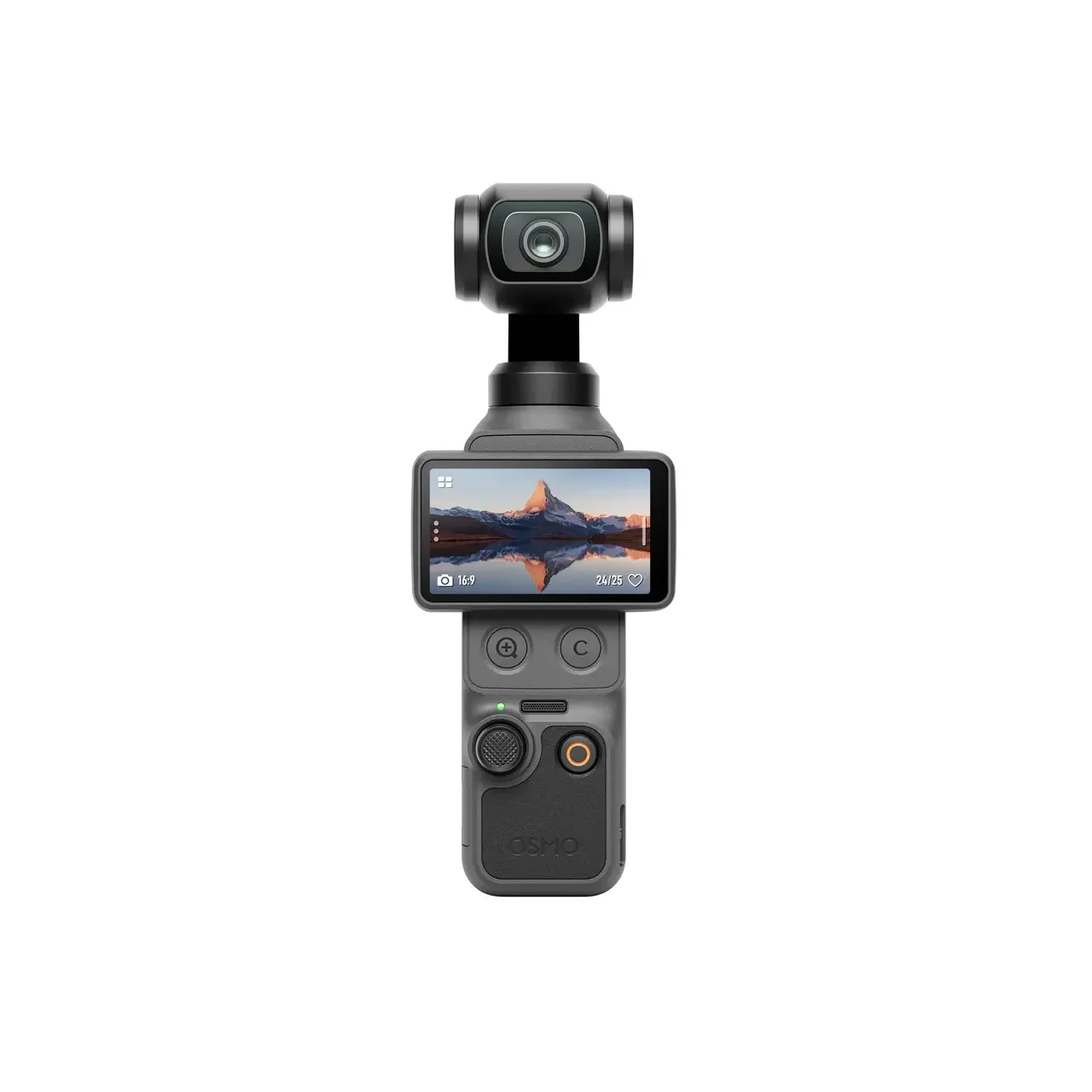
Front-facing flip screens, USB-C mic input, face-tracking autofocus, and 30-minute battery runs — every spec a creator actually needs.
Shop vlogging cams →Waterproof Action Cameras for Underwater Filming
Sealed bodies rated to 10–60 m, dive-tuned white balance, red-filter accessory support — pool, reef, and serious scuba ready.
Shop waterproof models →Helmet Mount Action Cameras for Motorcyclists
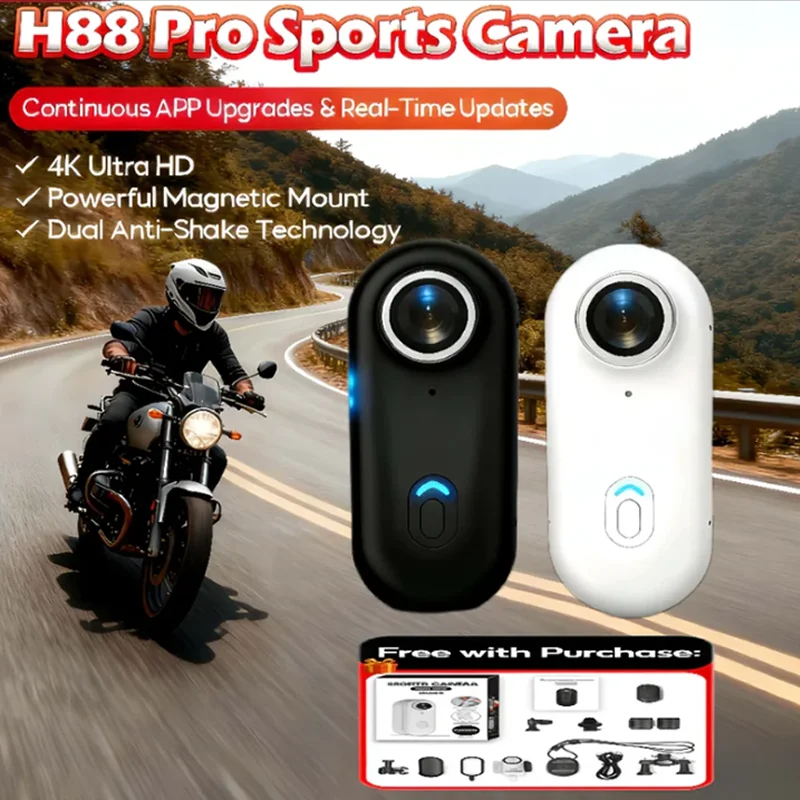
POV shots from the chin, top, or side of the helmet. Vibration-damped mounts, tether straps, and low-light tunnel performance baked in.
Shop helmet cams →Action Camera for Mountain Biking
Chest, bar, and seat-post mounts that shake off rock gardens. 2.7K/60 fps slow-mo, IP68 mud sealing, side-door battery swaps trailside.
Shop MTB cams →Sports Cameras for Skiing & Snowboarding
Wide dynamic range to tame snow glare, glove-friendly buttons, voice control, and warm-pocket batteries that survive a powder day.
Shop winter cams →Travel Action Cameras for Road Trips
Pocketable bodies, voice control on busy streets, splash-proof for pool days and rainstorms. The do-it-all camera for your carry-on.
Shop travel cams →
Fresh drops
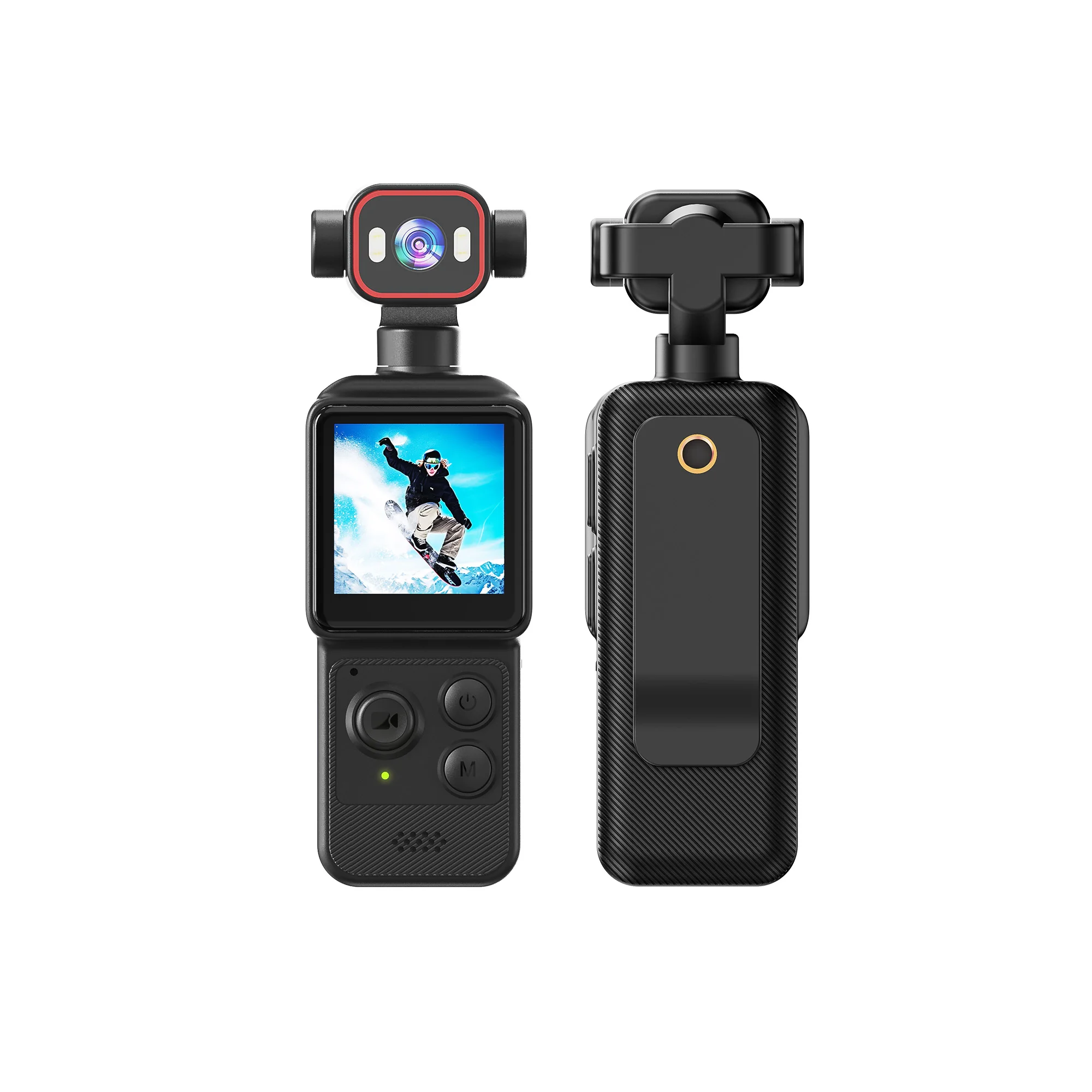
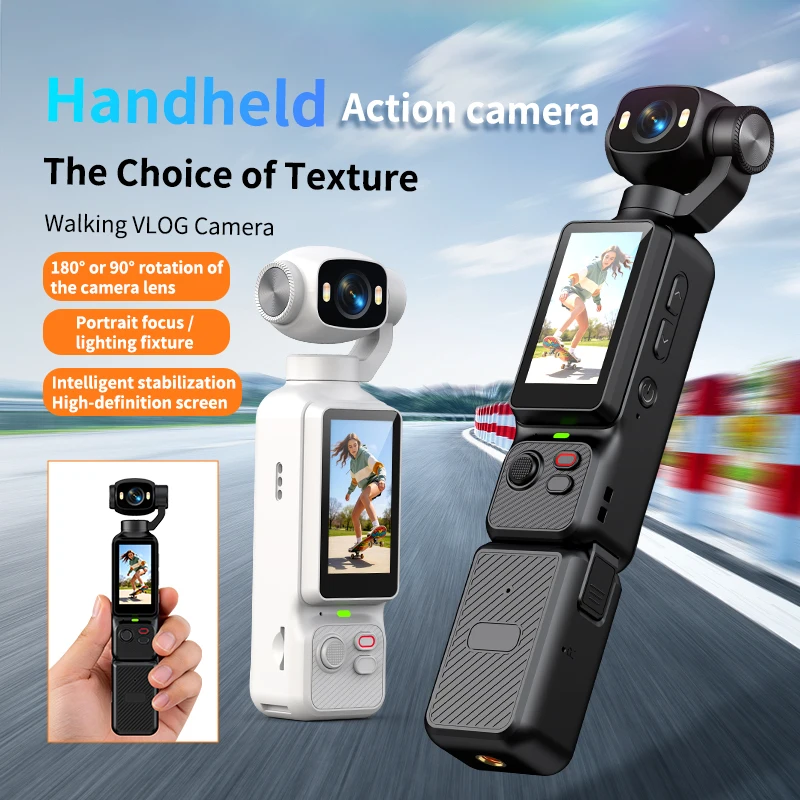
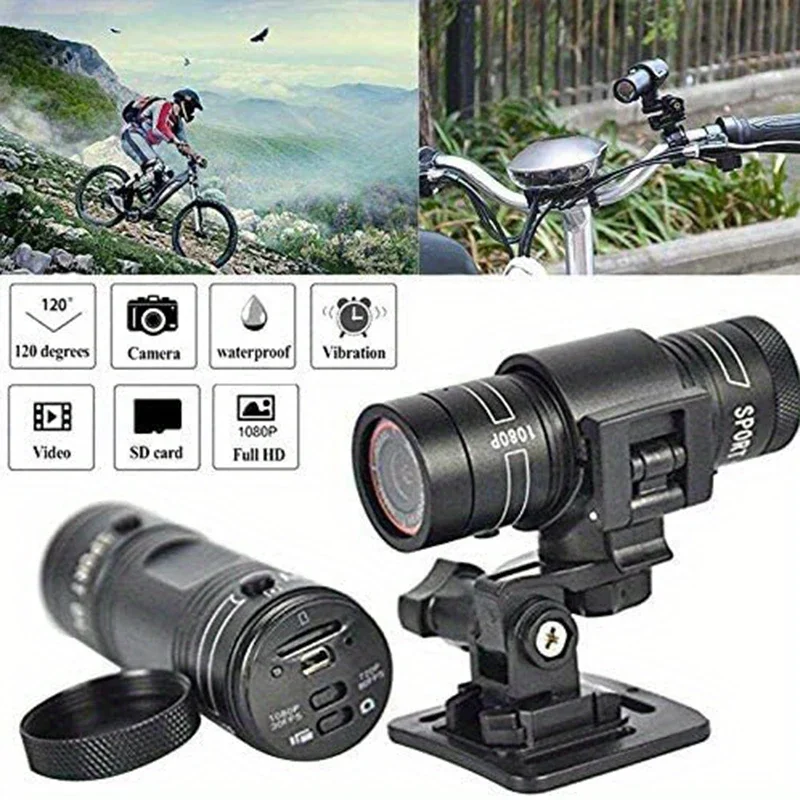
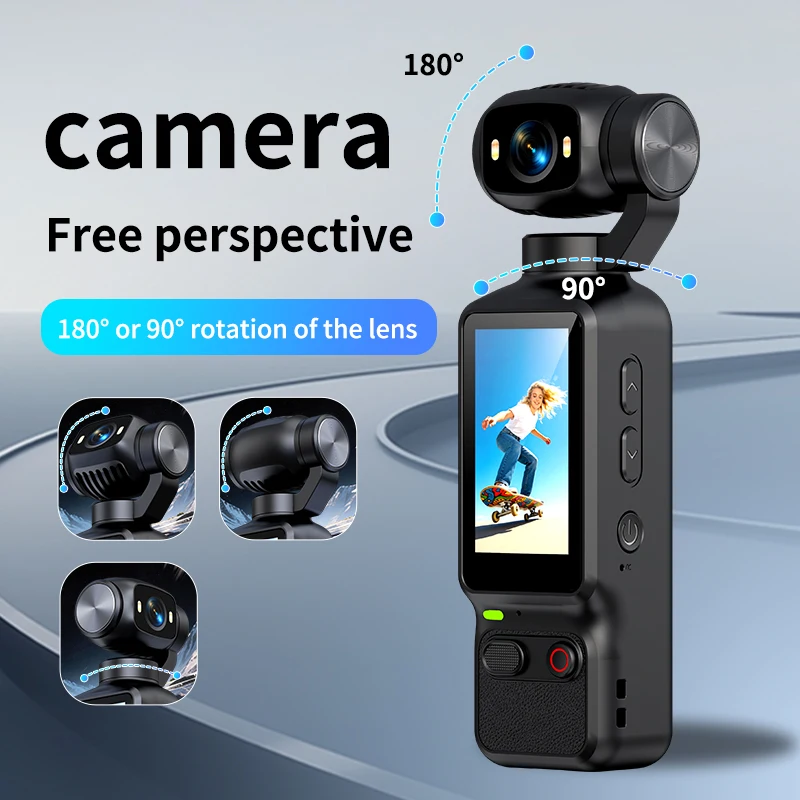
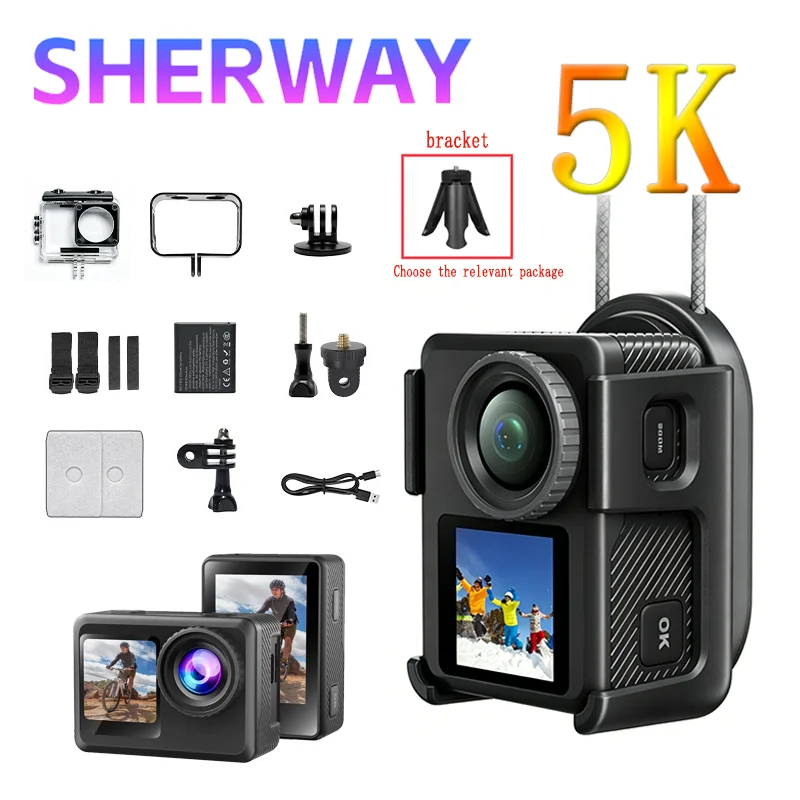
New Action Camera Arrivals
The latest 4K shooters, waterproof models, and creator-tuned vlogging cameras — newly added to the catalog.
Buyer's guide
Six decisions that make or break the shot.
Before you buy, work through the specs that actually matter. Here’s our editorial take on each one — written for adventurers, not engineers.
4K Action Cameras for Crystal-Clear Adventure Footage
4K has become the new baseline. A 4K action camera captures roughly four times the detail of 1080p, giving you the freedom to crop, zoom, and stabilize in post-production without losing image quality. When you record at 3840 × 2160, even fast-moving subjects — a surfer threading through a barrel, a rider cutting through a forest — retain sharp edges and natural color.
A modern 4K shooter also handles low light better than older models thanks to larger pixels and smarter HDR pipelines. Look for 4K at 60 fps for buttery slow motion, h.265 (HEVC) encoding for smaller file sizes that don’t choke editing software, and a wide dynamic range mode that preserves shadow and highlight detail under harsh sun. Our 4K range covers every budget — from entry starters to flagships with cinema-grade glass and refined color science.
Image Stabilization in Action Cameras Explained
Stabilization is the single feature that separates watchable footage from queasy shake-cam. Modern cameras combine electronic image stabilization (EIS), sensor or lens shifts, and gyroscopic data to compensate for motion across three or more axes. The best systems hold the horizon level even when the camera is rotated upside down mid-shot.
Pay attention to the stabilization version — flagships are on their fifth or sixth generation, with each iteration offering tighter framing, less crop penalty, and smoother results at higher frame rates. Some cameras let you record raw gyro data alongside the video and stabilize in post-production using free software — perfect for filmmakers chasing the cleanest possible image. If you mount on a motorcycle, ride MTB, or shoot from a drone, prioritize a model with both EIS and horizon leveling enabled at your target frame rate.
WiFi Action Cameras for Instant Sharing
A WiFi action camera pairs directly to your phone for remote framing, big-screen preview, and one-tap transfer of highlight clips — no SD card juggling required. Most modern cameras pair via QR code or Bluetooth handshake, then stream a low-latency preview to a companion app where you can change settings, start and stop recording, and download favorites.
For travelers and creators, this matters more than it sounds. After a day of skiing or surfing, you can draft an Instagram reel from the lift line or beachfront cafe instead of waiting until you get home. Look for both 2.4 GHz and 5 GHz support for faster transfers, and a companion app with auto-highlight clips, basic edits, and direct posting to YouTube, TikTok, and Instagram. RTMP streaming-ready models let you broadcast a downhill run or sailing leg with just a phone hotspot.
Understanding Action Camera Battery Life
Action camera battery life is a fundamental trade-off: smaller body, smaller battery; more aggressive 4K + stabilization, faster drain. Most modern cameras deliver 70–120 minutes of continuous 4K recording per fully charged battery, with Full HD modes stretching closer to two-and-a-half or three hours.
Cold weather is the silent killer. Lithium-ion loses 20–40% of its capacity below freezing, so a one-hour skiing battery may quit after 35 minutes on a bitter chairlift. Keep spares in an inside pocket against your body, and never start a session with a half-charged cell if you can avoid it. USB-C PD power banks let you film indefinitely from a backpack, and several of our models accept pass-through charging during recording — perfect for long time-lapses, dashcam runs, or full drone flights.
Essential Action Camera Accessories and Mounts
The camera is only half the story — action camera accessories turn a great shooter into a great kit. The essentials almost every user needs: a couple of spare batteries with a multi-bay charger, a fast UHS-I or UHS-II microSD card (V30 or better), and a hard-shell case that survives a backpack toss between airports and trailheads.
From there, the kit depends on your sport. Layer in adhesive helmet mounts, chest harnesses, suction cups for vehicles, jaw clamps for handlebars, magnetic clips for clothing, floaty handles for water, and an external lavalier mic. Add neutral-density (ND) filters for cinematic shutter speeds and a selfie pole that doubles as a stabilizing extension. Build a small, well-chosen kit rather than hoarding gadgets — the best mount is the one you actually pack when you head out the door.
Action Camera Audio: Wind Noise and External Microphones
Great video with bad audio looks amateurish immediately. Action camera audio is a perennial weak spot — the built-in mics are tiny, often blocked by mounts or housings, and constantly battered by wind. Modern cameras compensate with multi-mic arrays, on-device wind noise reduction, and even AI voice isolation, but external audio is the upgrade with the biggest impact on perceived quality.
For vlogging, a clip-on lavalier (USB-C wired or 2.4 GHz wireless) is the single best investment you can make. For motorcycle or sports use, a foam windscreen or fluffy “dead cat” cover dramatically reduces wind rumble at speed. Many of our cameras include a 3.5 mm or USB-C input — check compatibility before you buy. If you record dialogue, lay a clean voice-over over the action footage; the audience won’t notice the swap.
Spec compare at a glance
Choosing the Right Action Camera Resolution and Frame Rate
Resolution and frame rate are the two specs new buyers most often misread. Higher isn’t always better — the right combination depends on your editing workflow and where the footage will live. Here’s the cheat-sheet we’d hand a friend.
4K · 30 fps
Sharp
Maximum detail for travel, scenery, family. Easy to edit, crops down to clean 1080p HD.
4K · 60 fps
Smooth
The sweet spot for sports POV. Slow-mo on demand without quality loss.
2.7K · 60 fps
Quick
Smaller files for fast phone editing — perfect for TikTok, Reels, and Shorts.
1080p · 240 fps
Slow-mo
Cinematic 1/8x slow motion for surf, skate, and ski edits.
Use cases · deep dives
Specialist setups for specialist shots.
Four configurations our most demanding customers ask about — what to mount, what to expect, and where each camera shines.
Mini Action Cameras: Compact Power in Your Pocket
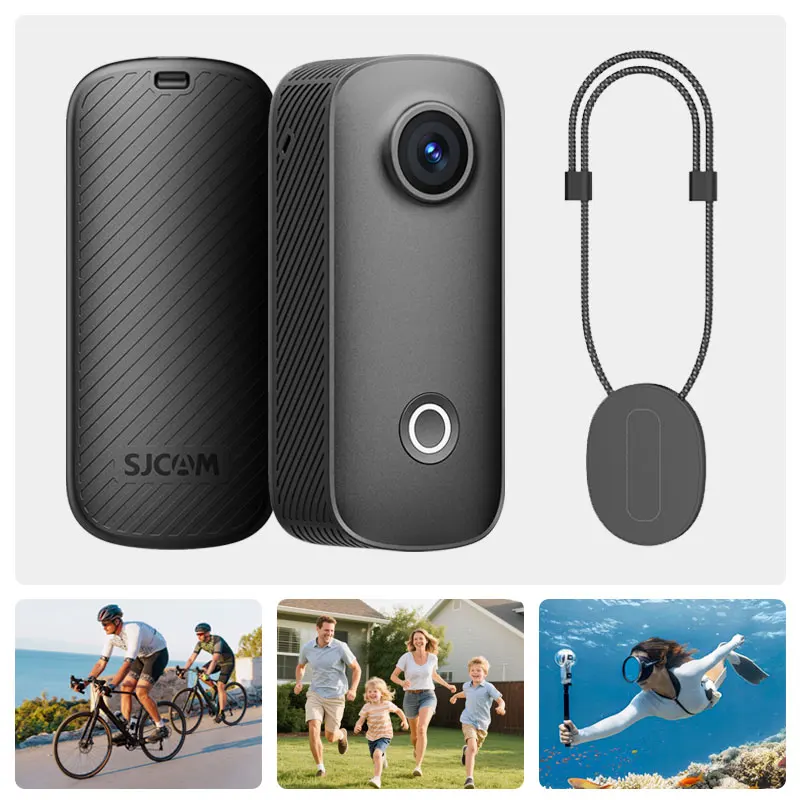
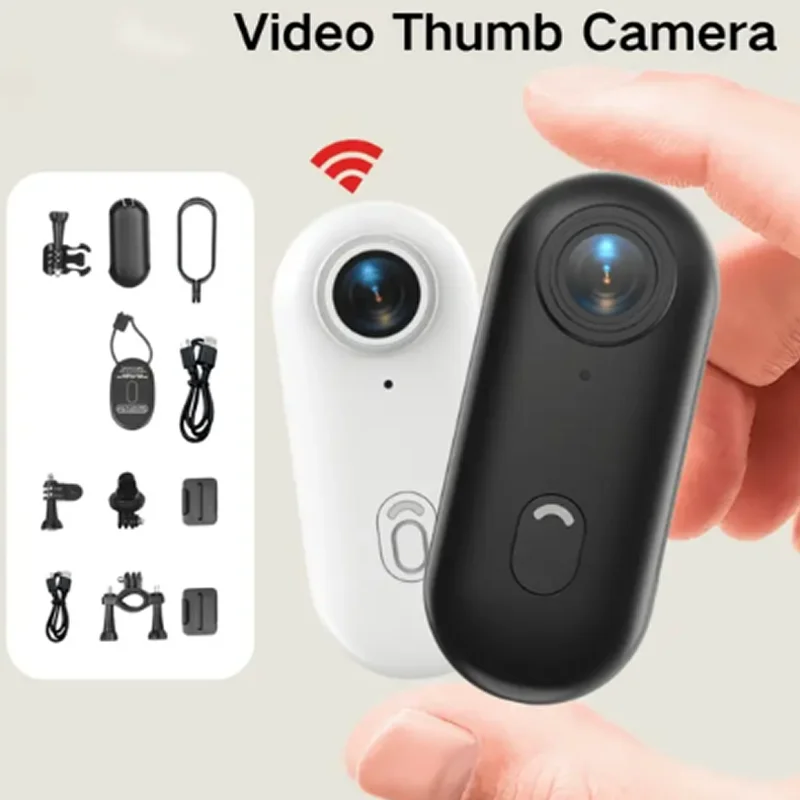
A mini action camera trades screen size and battery for the smallest possible footprint — often half the weight of a flagship and small enough to clip to a backpack strap, a dog harness, or under the brim of a cap. For first-person sports where every gram matters, mini cameras are transformative. Climbers shave grams; trail runners stop noticing the weight after the first kilometer; bikepackers can rig three at once for multi-angle edits.
Mini cameras typically use the same sensor and stabilization technology as their bigger siblings, so video quality stays competitive. The trade-offs are ergonomic: smaller (or no) screens, fewer hardware buttons, shorter per-charge runs. They compensate with magnetic quick-release mounts, instant pairing for control from a phone or smartwatch, and modular clip-on displays or extended battery packs. Pair a couple of swappable batteries and a fast charger and you’ll never miss the decisive shot — even on a multi-day expedition.
Action Cameras for Drone and Aerial Cinematography
Many pilots use a separate action camera for aerial cinematography — either bolted to a custom drone frame for cinematic angles or strapped to a quad for FPV racing. The appeal is simple: a wide field of view and aggressive stabilization translate beautifully to airborne footage, where smooth motion and a sense of scale matter most. Aerial editors love the de-fished, almost-flat lens profile of a modern action camera for stitching into traditional drone footage.
For most cinematic drone work, a sub-100-gram body with a flat lens profile (or post-process de-fish) gives the most editing flexibility. Anti-vibration mounts isolate the camera from prop noise, and a polarizing filter cuts sky reflections off lakes, snow, and glass buildings. For FPV racing, a tiny “naked” body shaved of all unnecessary plastic delivers maximum quality at minimum weight — just accept that it’s now disposable on crash days. With the right setup, even an entry-level drone produces footage that looks like it came from a helicopter rig.
Action Cameras for Snorkeling and Scuba Diving
Underwater is where action cameras truly shine. An action camera for snorkeling and scuba diving needs waterproofing to your dive depth, plus careful tuning for the visual quirks of water — reduced light, color shift, floating particles, and shifting refraction near the surface. Most modern cameras are snorkel-ready straight out of the box to about 10 m; deeper recreational scuba uses an optional pressure housing rated to 40 or even 60 m.
For snorkeling, a red filter and dive-tuned white balance dramatically improve color — fish and corals leap from the frame in a way an unfiltered camera flattens. For scuba, prioritize long battery life (cold water shortens runs), a hard lock button (so you don’t stop recording with neoprene fingers), and a video light bracket for deeper, darker dives. After every salt-water dive, soak the camera in fresh water for 15 minutes, work the buttons under water, and let it dry slowly. Treat the camera well and it’ll deliver years of bubble-free footage.
Chest Mount and Body-Worn Action Camera Setups
A chest mount action camera setup is a favorite of mountain bikers, kayakers, skiers, motocross riders, and climbers because it gives a strong sense of speed, naturally places bars, skis, or rope in the frame, and is more comfortable than a helmet rig on multi-hour sessions. Quality chest harnesses use adjustable, breathable straps with a quick-release buckle and a rotating mount that adapts to anatomy and clothing layers.
A few placement tips: angle the camera slightly downward to keep the horizon roughly centered, tighten the harness so the camera doesn’t bounce on impact, and add a tether for redundancy. Other body-worn options include shoulder mounts (great for paddling), backpack-strap clips for hiking and travel, and wrist straps for swimming or low-angle creative shots. Mix and match — most creators rotate among three or four body-worn positions in a single edit to keep viewers visually engaged and the story moving forward.
FAQ
Quick answers to the questions we get most.
What Is an Action Camera and How Does It Work?
An action camera is a small, rugged, ultra-wide-angle camera designed to mount on helmets, chest straps, bikes, drones, or any surface where a traditional camcorder would be impractical. Unlike a smartphone, it’s purpose-built for movement, water, dust, vibration, and impact — survival comes first, polish second.
Most modern action cameras pack a 1/2-inch or 1/2.3-inch sensor capable of 4K at 30–60 fps, with electronic image stabilization to smooth running, riding, or paragliding. The integrated wide lens (120°–170°) plus on-board real-time encoding mean you press one button and get usable footage — no settings to wrestle, no fragile glass to crack. Battery doors and side panels are sealed; mounting points are universal so the same camera moves between helmet, bar, and chest in seconds.
Many models include built-in mics, GPS for telemetry overlays (speed, elevation, location burnt into your video), voice control for hands-free use, and wireless connectivity for instant transfer to your phone. The result is a camera that captures footage you simply couldn’t get any other way — from inside a barrel wave to the cockpit of a motorcycle.
Action Camera vs Smartphone Camera: When Each Wins
A flagship smartphone shoots gorgeous 4K video, so a fair question is: do you really need a separate action camera? The honest answer is that the two solve different problems, and most serious creators use both.
A smartphone is the camera you always have, with a huge sensor and computational tricks for everyday scenes — food, family, scenery, low-light bars and concerts. Color science is gorgeous, autofocus is brilliant, and editing happens on the same device. But the moment you add water, dust, rain, impact, extreme cold, or a moving subject, the action camera takes over.
Action cameras have wider lenses (great for environment-aware first-person shots), tougher housings, mounting options a phone can’t match, dedicated voice control, and waterproofing far beyond a phone’s IP rating. They also use more aggressive stabilization tuned for sports motion rather than walking. Use your phone for cafes and concerts; reach for an action camera for surfing, snowboarding, diving, racing, or any time the camera might end up upside down, underwater, or under impact. Many creators carry both and cut them together in the same project.
How Do I Pick a Helmet Mount Action Camera for Cycling?
Helmet mounts are popular with road cyclists, motorcyclists, motocross riders, and skydivers because they capture the iconic POV shot — the rider’s eye-line, hands-free, with the bike or board moving naturally below the frame. For cycling specifically, look for low-light performance (tunnels, dusk rides, dawn departures), a high bitrate to preserve detail at speed, and IP66+ weatherproofing for sudden rain.
Adhesive helmet mounts work well on smooth helmets; strap mounts suit ventilated or irregular helmets where adhesive can’t bond reliably. Chin-mounts give the most natural eye-line view; top-mounts deliver a dramatic helicopter perspective. A safety leash is cheap insurance against losing your camera if the mount fails at 50 km/h on a descent. For road cycling, add an aerodynamic enclosure or naked-style camera body to cut drag and wind noise.
Check local helmet regulations before mounting — some jurisdictions restrict protruding mounts or require removable adhesives. Test the mount on a short, low-speed ride first and confirm the camera doesn’t vibrate enough to introduce micro-shake in 4K footage.
Caring for Your Action Camera: Maintenance and Longevity
An action camera built to survive impact, mud, and saltwater can still be ruined by simple neglect. Camera maintenance isn’t complicated, but it has to become a routine: rinse, dry, inspect, and store. Skip it once and you’ll find a seized button or fogged lens the next time you need a perfect shot.
After every salt-water session, soak the body in fresh water for 10–15 minutes and operate the buttons under water so salt flushes out from beneath rubber seals. Dry slowly out of direct sun — fast drying in a hot car can warp the polycarbonate housing. Check the gasket inside the battery door for sand, hair, or grit at least every other session; a single grain can break the seal on your next dive, and most water damage is a slow leak rather than a catastrophic flood.
Update firmware whenever a new version is released — manufacturers frequently improve stabilization, battery management, codec efficiency, and even bug fixes that affect long-term reliability. Store batteries at 50–70% charge if you won’t use the camera for a few weeks; full or empty long-term storage shortens lithium-ion lifespan. Keep one waterproof drying pouch with silica gel in your kit; toss the camera inside after a humid day so internal condensation doesn’t form on the lens overnight. Small habits, years of clean footage.